Volumes of revolution from parametric curves
Sketch, identify sections, and substitute
For a region bounded by a parametric curve, first understand the curve and its branches. Next, cut the solid perpendicular to its axis of revolution and write its cross-sectional area. Finally, substitute the parameter into the resulting integral.
For rotation about the -axis, a section may be a disk of area or a washer of area . A hole occurs when the original section does not meet the axis. Do not automatically use a disk for every .
Parameter substitution uses , including its sign. Branch integrals sometimes join into one parameter integral, but this depends on the geometry and orientation. There is no general guarantee that arbitrary sections can always be merged.
See parametric sketches and parametric areas for the supporting calculations.
Example 1: revolving a cardioid
Find the volume swept out by rotating the region enclosed by
once about the -axis.
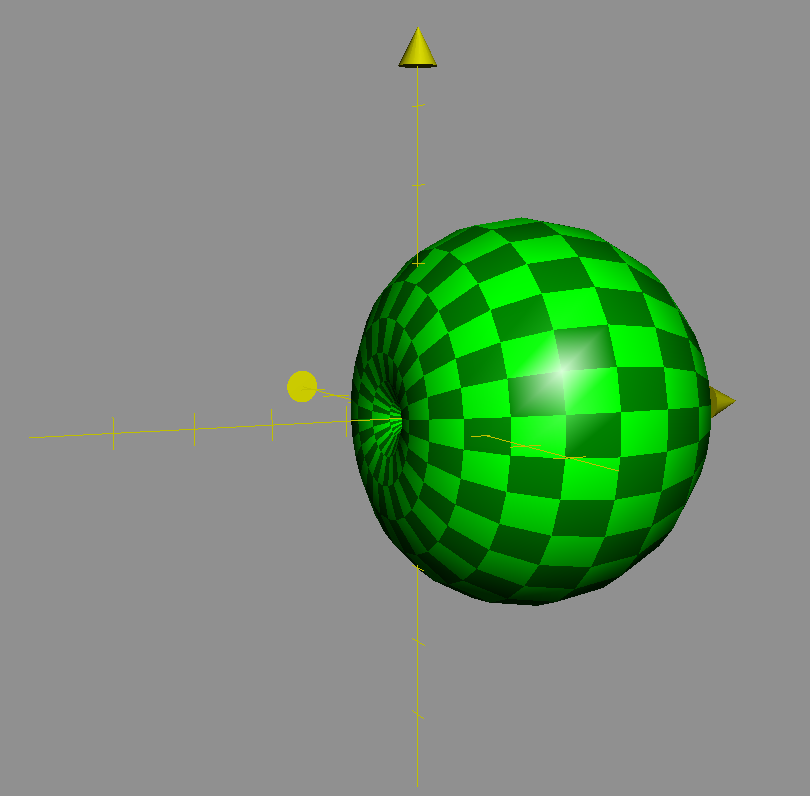
The region is symmetric about that axis. Its upper half alone generates the whole solid, so do not double the volume after rotating it.
On ,
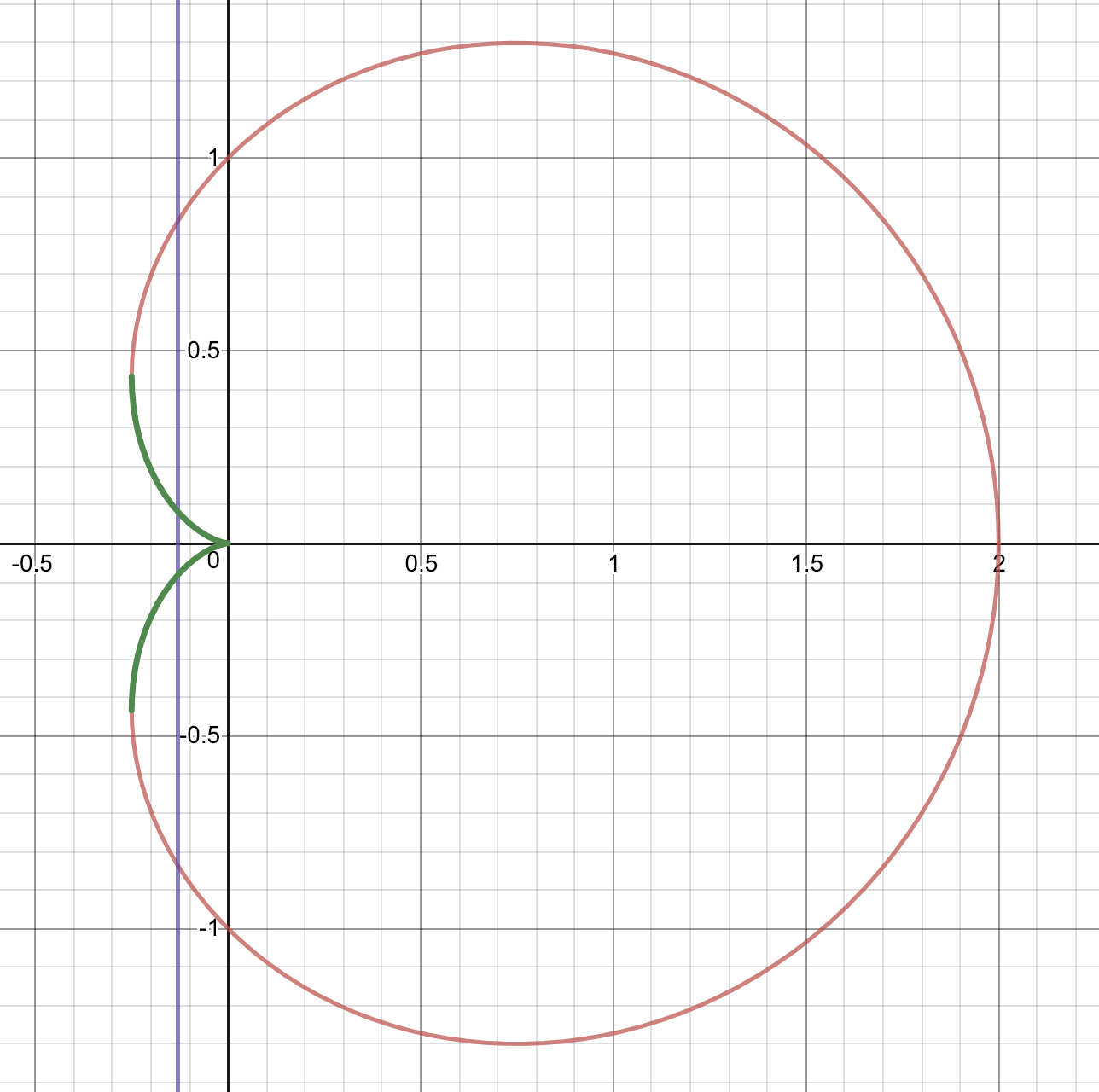
The point runs from through at , then to the leftmost point at , and finally to .
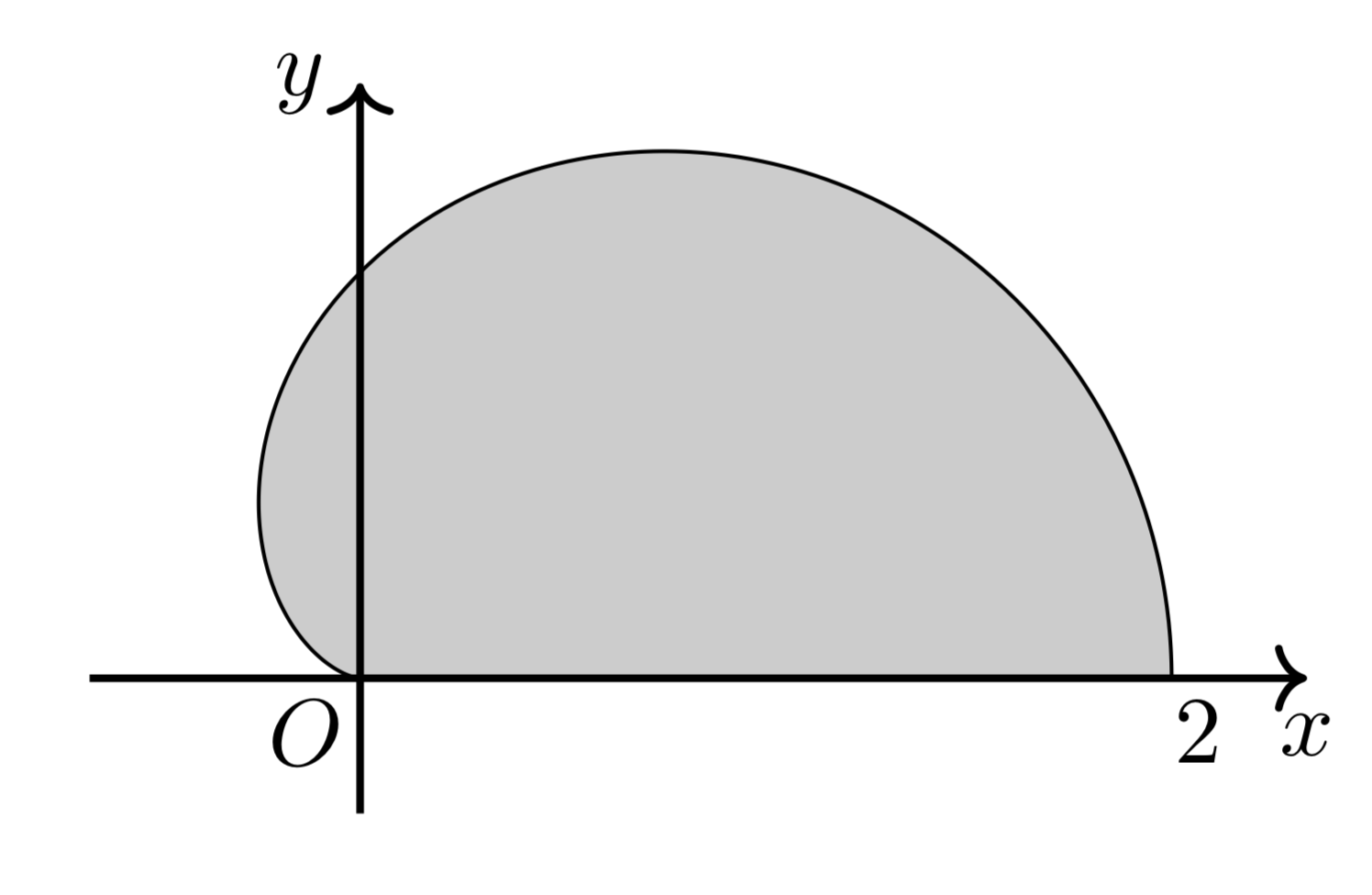
Call the height on , and that on . For the section is a washer; for it is a disk. Thus
Notice that the inner-radius integral ends at zero, not at two. Correctly orienting each parameter interval gives
Retain one factor and write the rest using . Since ,
Odd powers integrate to zero on the symmetric interval. This also avoids carrying unnecessary terms in the antiderivative.
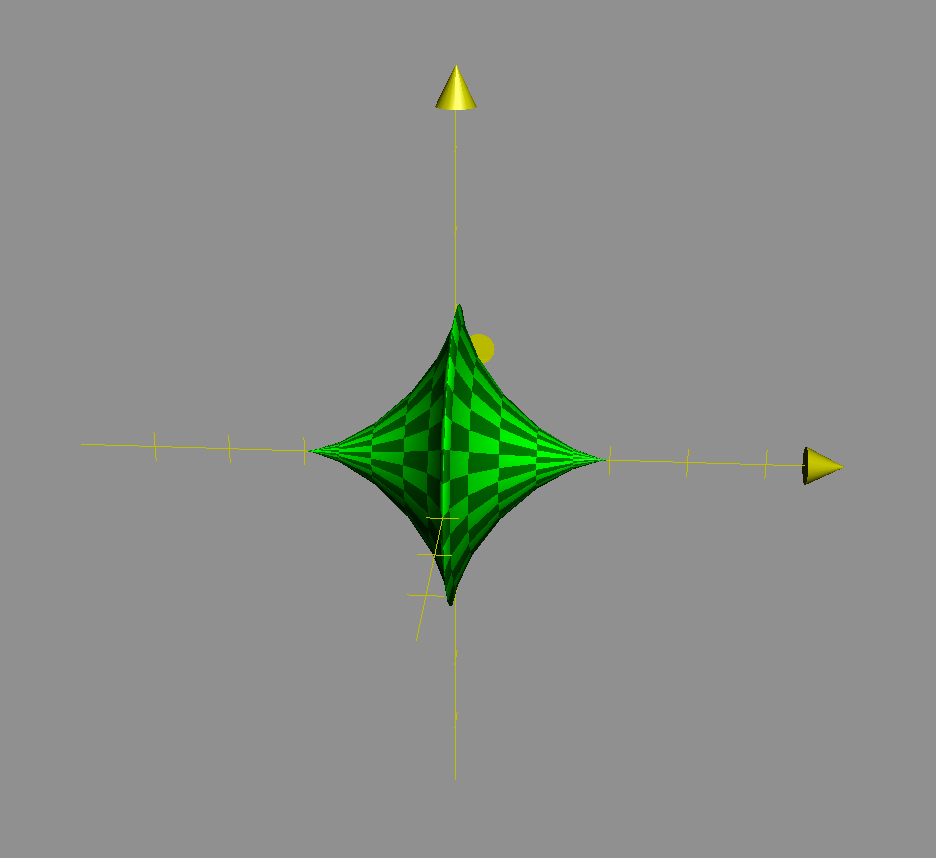
Example 2: revolving an astroid
Find the volume swept out by rotating the region enclosed by
once about the -axis.
The curve is symmetric about both coordinate axes. Revolving the first-quadrant region gives the half of the solid with , so double that volume. There is no further factor for reflection across the axis of rotation.
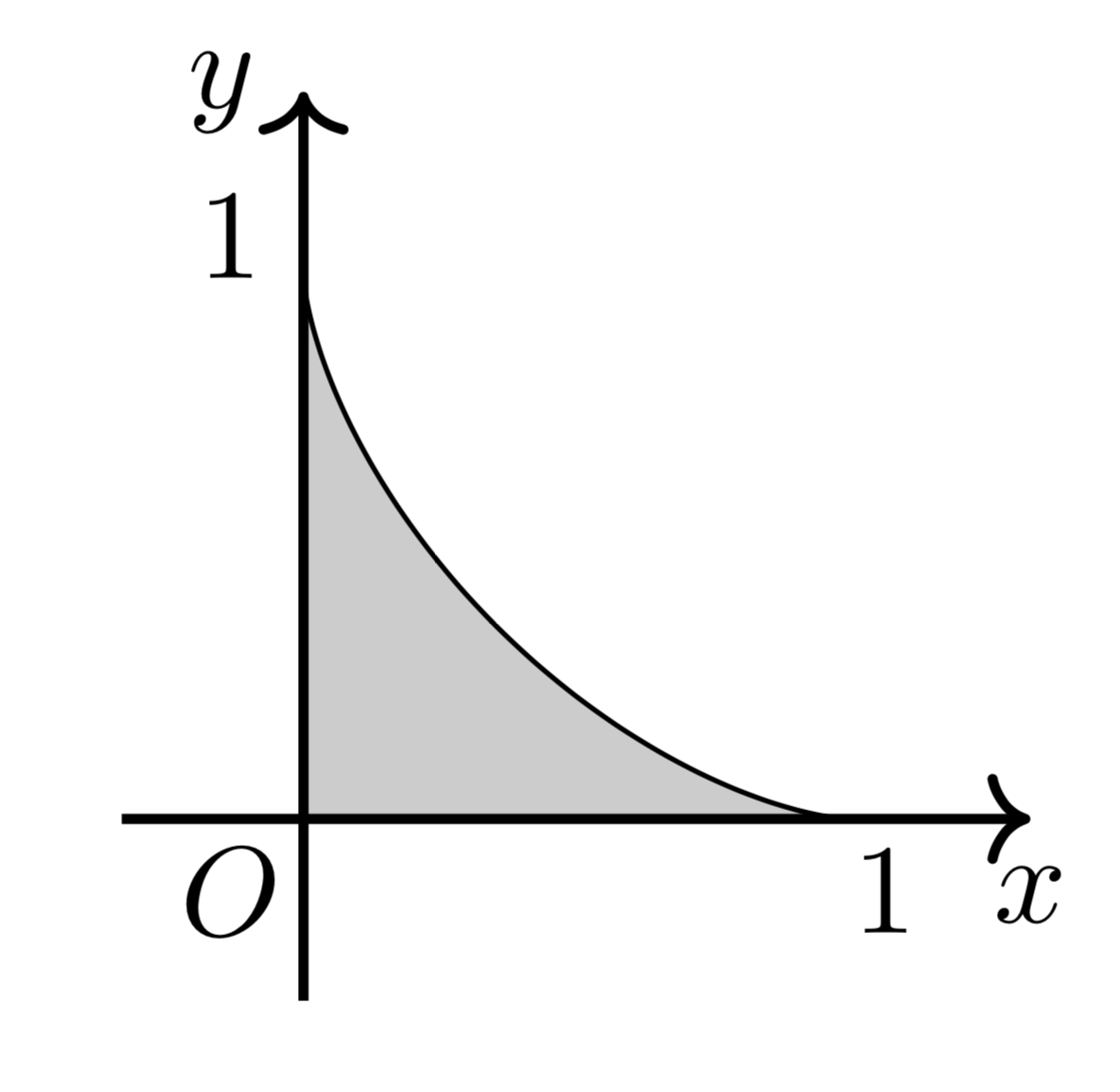
On ,
Each perpendicular section is a disk. The half-volume is
Again let :
Therefore
Useful checks
A volume must be nonnegative, but a negative result should prompt a review of bounds and orientation rather than an automatic sign change. Check whether sections are disks or washers, whether any part was swept more than once, and which symmetry factors remain after rotation.
For powers of sine and cosine, an odd power often allows you to reserve one factor for substitution and express the remaining even powers using . That is why both volume integrals above become polynomial integrals.
Related articles
- Equating rational and irrational parts: proof and worked problems
- How to simplify nested square roots, with three worked examples
- Conditional probability: the formula, information protocols, and worked examples
- Integration by parts: formulas, proof, and four useful patterns
- Triple-angle identities: remember, derive, and apply them
About the author
Koki Saito
Physician and graduate of the University of Tokyo Faculty of Medicine. Drawing on his entrance-exam experience, he explains how to choose mathematical methods and construct complete solutions.
Full profile →Have a question or spotted an error? Contact us.